
EN
B2B catalog · Product data · SEO
A B2B steel catalog built around technical specifications.
We developed a catalog for UKRSTEEL where buyers select steel products by specification, compare variants and build a combined request for a quote. Product data, filters and the enquiry list work together in one interface.
Project overview
- Role
- Catalog architecture, interface design and development
- System
- Product selection and quote requests
- Languages
- Ukrainian and Russian
The buying process
Product selection starts with specifications.
Steel procurement depends on dimensions, grade, standards and manufacturing methods. We organised the catalog around these specifications, connecting product groups with the variants buyers need to compare. Price and availability are confirmed through an enquiry.
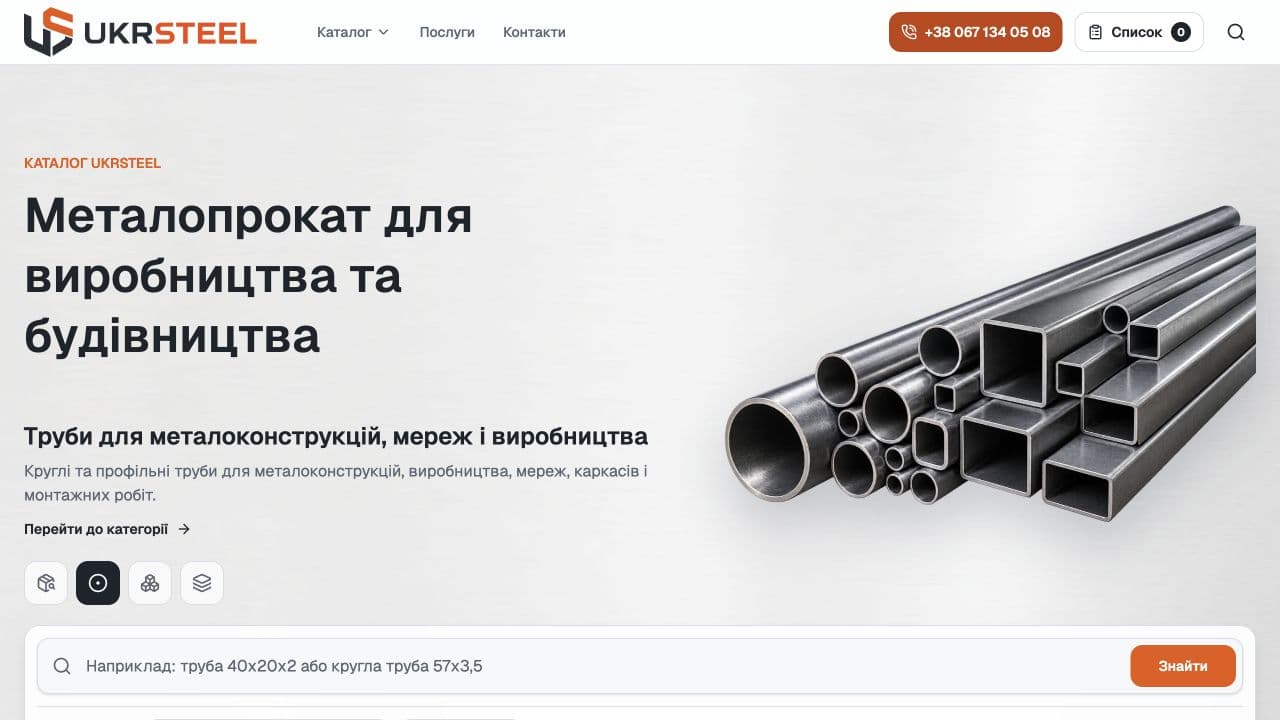
- 01Search by specification
- 02Product groups
- 03Quote requests
Product selection
Filters match the product being selected.
Different steel products require different selection criteria. We connected the filters to product data so buyers can narrow the selection using relevant characteristics. They can compare variants in a table or switch to cards, keeping product specifications in view.
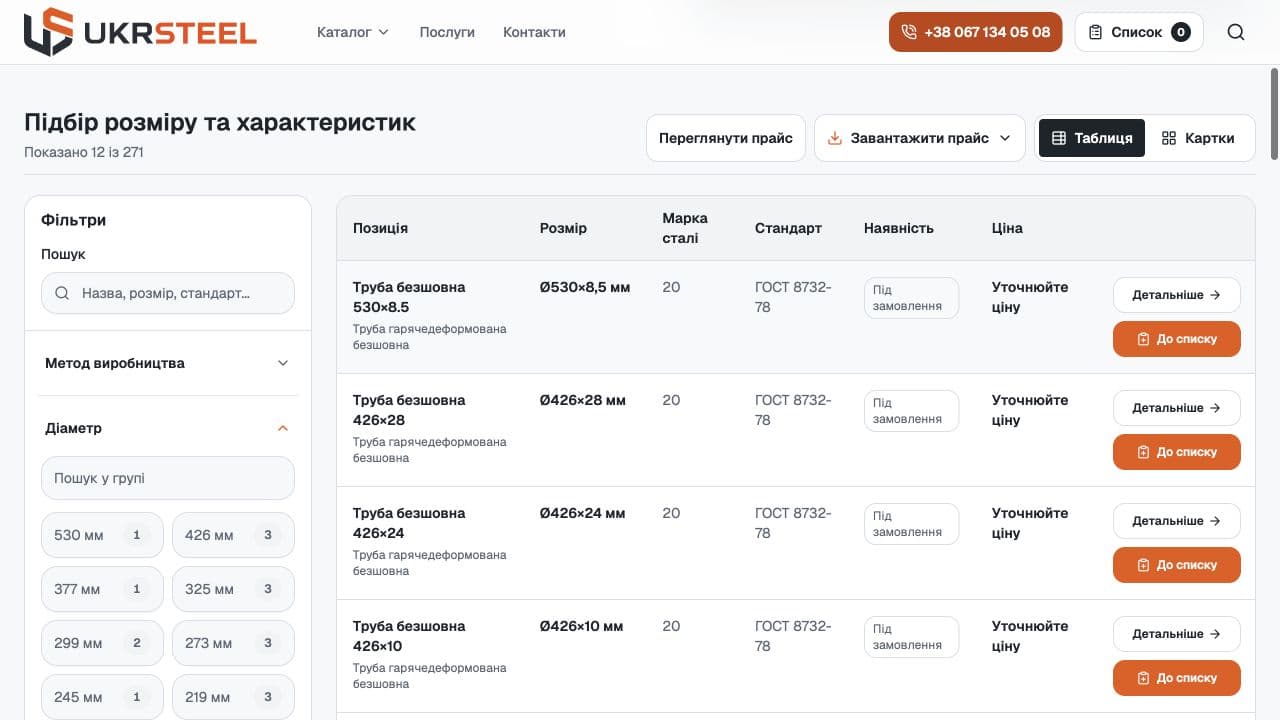
- 01Product-specific filters
- 02Variant comparison
- 03Table and card views
Quote requests
Several products. One request for a quote.
Buyers add selected products to a specification list, set quantities and units, and submit one combined enquiry. Product characteristics travel with the request, so there is no need to retype them in a message to the sales team.
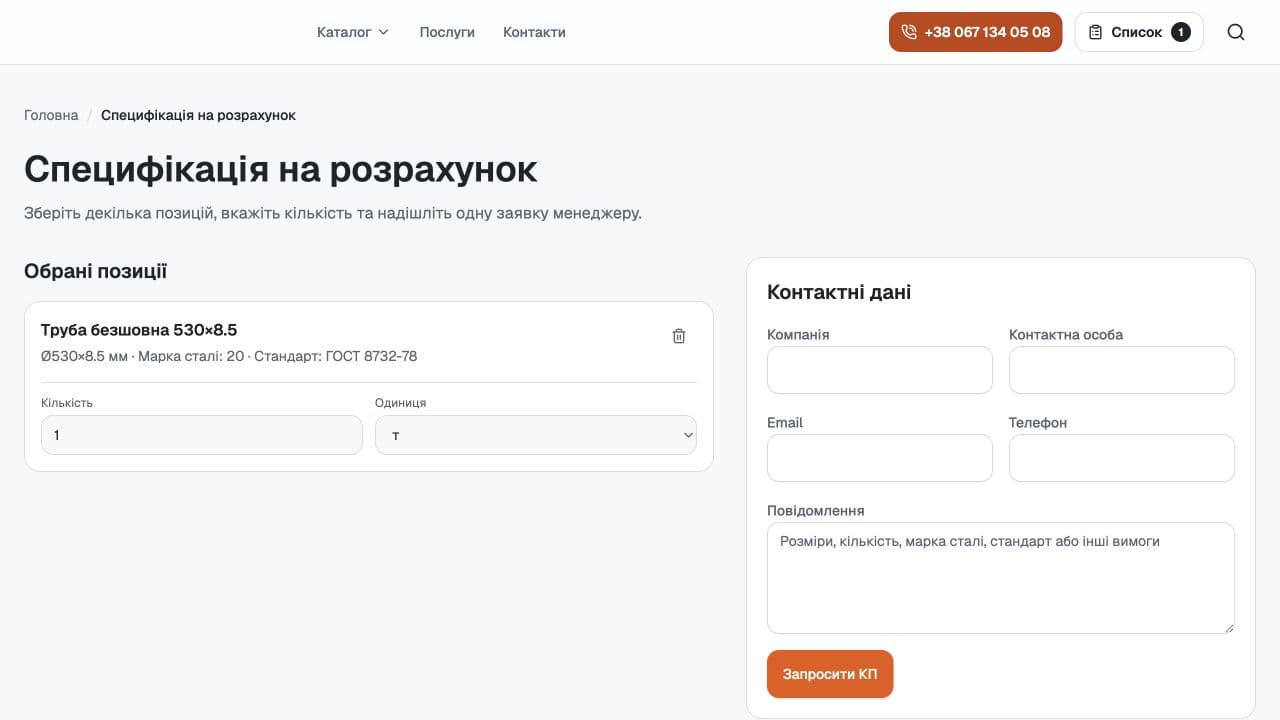
- 01Selected product parameters
- 02Quantities and units
- 03One combined enquiry
The result
From product selection to a request with clear specifications.
Buyers can find steel products by their characteristics, compare variants and collect several items in one enquiry. The sales team receives the selected products, specifications and quantities needed to prepare a quote.
Catalog structure
A shared structure for products, filters and pages.
The catalog connects product groups, selection criteria and individual variants through one data model. Each variant has a canonical address, and Ukrainian and Russian versions provide separate localised routes. This gives product discovery and technical SEO a common foundation.